Room and rules
What the space is, who must approve the work, and when it can happen.
Workplaces
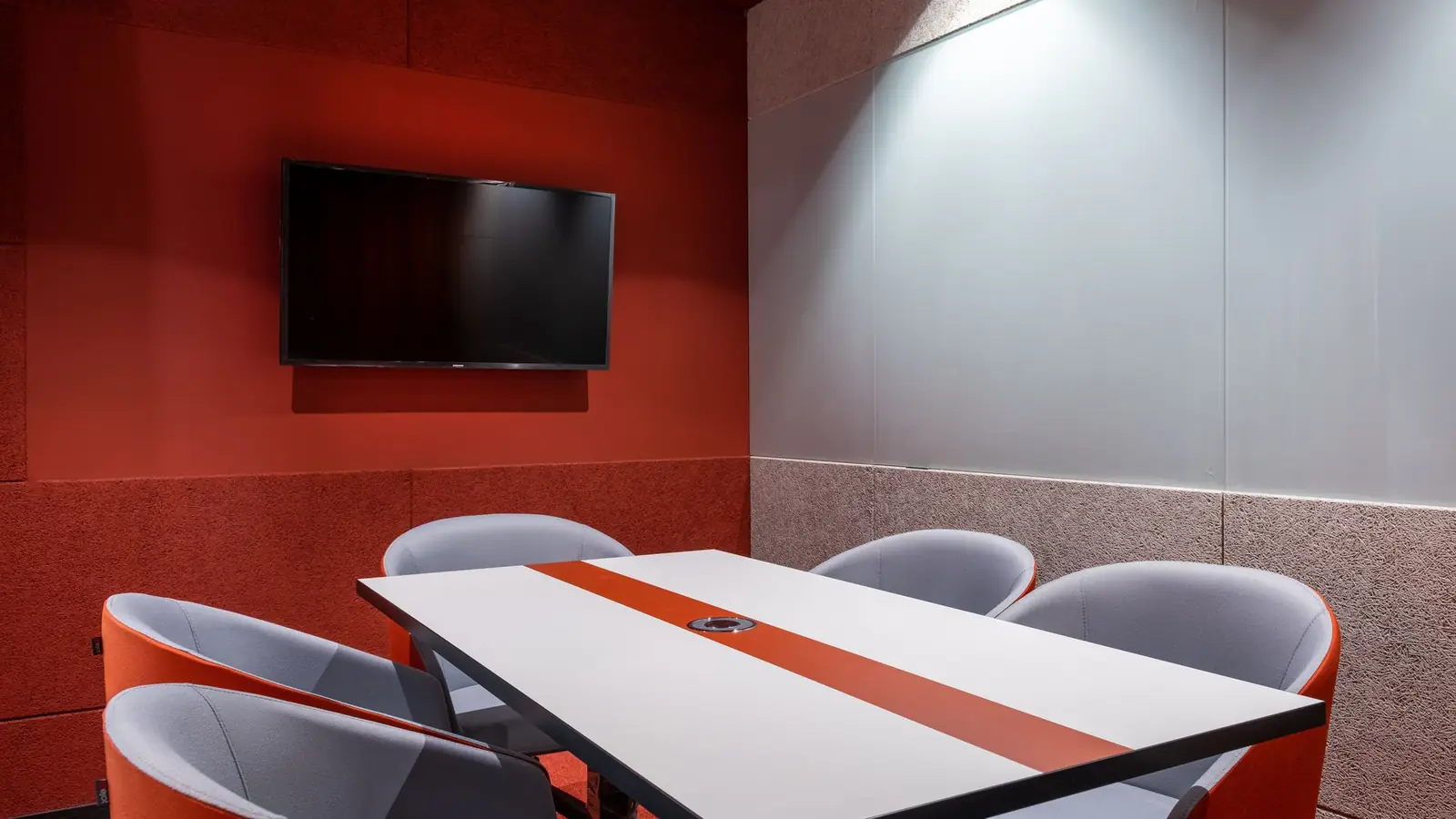
Commercial TV installation covers screens people stand in front of, sit around, or glance at while they wait. Kunaque plans Seattle offices, lobbies, and customer spaces around the height, the hours the room can be empty, and the cable path.
In a conference room the screen is often seen from a table, not a sofa, and from more than one angle. A fixed mount centered on the long wall is the usual answer. A full-motion arm that swings into a walkway is usually not. Menu boards, waiting rooms, and fitness floors add a second issue: the screen may sit higher because people are standing. Higher is a choice you can see in the estimate, not an accident of the tallest stud.
Commercial walls are frequently metal studs, block, or a combination hidden behind a finish the tenant cannot modify without approval. The building, not the installer, decides whether a hole is allowed. If a property manager has to sign off, that approval is part of the schedule. This website does not claim a contractor license. If the jurisdiction or the building requires a licensed trade or a permit for any part of the work, that requirement is identified before the job is booked.

A lobby that cannot close at noon needs an after-hours window. A restaurant may only offer a morning before prep. The estimate should say when the room is empty, whether a loading dock or a passenger elevator is the path for the carton, and whether more than one television is in the same visit. Several identical huddle rooms can share a method. They are still separate mounts, separate walls, and separate chances for a stud to land in the wrong place.
Large panels in a boardroom follow the same weight and doorway limits as large TV mounting. Masonry in an older commercial building follows brick and concrete. Cable routes in a finished tenant space are often restricted to a furniture feed or a surface path because the wall is not ours to open. That constraint is discussed on the cable management page and should be in the first message if the building has a low-voltage vendor already.
Sightlines for people who remain seated, including guests who need a clear view, are part of placing the screen. That is a layout conversation. It is not a claim that the installation is an accessibility certification.
After-hours work, a scissor lift or a tall ladder, metal studs, several screens, and a building that requires a specific cable path all change the scope. No commercial rate card is published here. The confirmed price follows the description you send.
Sequence
What the space is, who must approve the work, and when it can happen.
Sizes, mounts, and whether each display has its own source or shares one.
Metal studs, masonry, or a wall that cannot be opened. The cable plan matches that limit.
Scope, price, and the access window are agreed. The form itself is not a purchase order.
Questions
Only if the room can actually be empty enough to work. Many commercial installs are scheduled before opening or after closing. The request should say which window is real.
Yes, when they are described together. Each wall is still checked. A row of identical rooms is not assumed to be identical behind the paint.
Not by default. If the property already has a required vendor or a permit path, name that in the details. This website does not claim a license or a standing agreement with any building.
No. Mounting includes the holes the bracket needs and a cable route that was agreed. Repainting a lobby is a different trade and a different scope.
Related work
65-inch, 75-inch, and heavier screens, where weight, stud span, and the path into the room change the job.
View this service
Fixed, tilt, and full-motion brackets on wood or metal studs, with the screen height set from the seating.
View this service
A wiring plan for the mount: in-wall low-voltage paths where the wall allows them, and a clean cover where it does not.
View this serviceEstimate
A commercial TV installation is priced from access and structure, not from a residential checklist.
Request an estimate
An estimate request describes the job. It is not a confirmed appointment. Kunaque reviews the screen, the surface, and whether the address is in the Seattle, Washington service area, then follows up with scope and price before any work is scheduled.